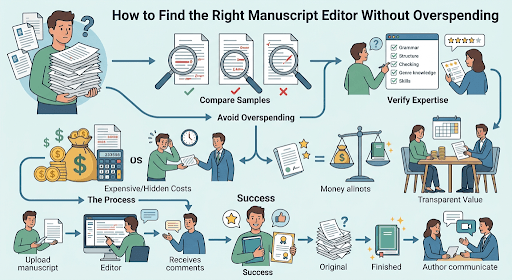
Every writer wants their book or paper to look its best. But at first finding the right manuscript editor can feel confusing.
Editor to editor prices change . Some editors charge too much, others do not deliver good work at all. Without wasting your money this guide will help you find a good manuscript editor.
You will learn what to expect and what to avoid. By the end, you will know exactly what a fair price looks like.
What Is a Manuscript Editor?
A manuscript editor is a person who reads your writing closely. They find mistakes. They fix weak sentences. They make your work clear and strong.
Some editors work only on books. Some editors work only on research papers. Some editors handle both kinds of work well.
Why Choosing the Right Editor Matters
Bad editing can hurt your chances to shine. A journal may reject a poorly edited paper. A reader may put down a poorly edited book.
Picking the right manuscript editor protects your hard work. It also protects your budget from being wasted.
Many writers only think about price. But value matters more than price alone. A cheap editor who misses errors is not really saving you money.
Understand Your Manuscript’s Needs First
Before you search for an editor, know what your manuscript actually needs. Ask yourself simple questions.
Is your story finished but messy? Is your research paper missing structure? Are your sentences just full of small errors?
A brand new draft usually needs developmental editing first. A finished draft usually needs copy editing or proofreading instead.
Types of Manuscript Editing Services
There are different kinds of manuscript editing services. Each one solves a different problem. Many writers mix up editing vs proofreading or other services, and end up paying for the wrong service. Here we have explained it in simple words.
Developmental Editing
This looks at the big picture of your work. It checks structure, plot is fit, or argument is correct. It happens before small fixes matter.
Line Editing
This looks closely at your sentences. It checks flow, word choice, and tone. It makes your writing sound smooth and natural.
Copy Editing
Across your document this checks grammar, such as is spelling correct, and consistency maintained. It fixes small errors that can break a reader’s trust.
Proofreading
This is the very last check before publishing. It catches leftover typos, spacing issues, and formatting mistakes.
How Genre and Subject Affect the Price
Fiction editing often costs differently than academic editing. Each type needs different skills from your editor.
- A manuscript editor working on medical research needs subject knowledge. This expertise can raise the price slightly.
- A manuscript editor working on a novel needs strong storytelling instincts instead. Pricing here depends more on genre complexity.
Signs You Might Be Overpaying
Without giving real value in return, some editors charge prices higher than normal. Watch closely for these warning signs.
- No sample edit offered before you pay anything
- Vague pricing with no clear breakdown of costs
- No proof of past work or real credentials
- Hidden rush fees that appear later in the process
- No free revision included in the original price
Where to Find an Affordable Manuscript Editor
Good editors exist at fair prices. You just need to know exactly where to look for them.
Professional Editing Agencies
Agencies often offer trusted manuscript editing services with clear pricing and real, qualified editors on staff.
Freelance Platforms
Freelance sites can be cheaper overall. But you must check reviews and ask for writing samples first.
Referrals From Other Writers
Ask other authors or researchers who they used before. A strong referral often means better trust and results.
University or Department Support
Some students can get free or low cost help through their own university writing centre first.
A trusted provider of book editing services can also guide you through formatting and submission steps. This saves you from hiring several different people for one project.
What a Good Sample Edit Should Show You
Most trustworthy editors offer a free sample edit before you pay. This usually covers one or two pages.
A good sample shows you their editing style clearly. It shows how many changes they make, and why.
Look for clear comments that explain each change. This shows the editor truly understands your writing goals. If an editor refuses to offer any sample at all, treat that as a serious warning sign.
Manuscript Formatting: A Cost You Should Not Skip
Manuscript formatting is often forgotten during budgeting. But it truly matters a lot in the end. Publishers and journals often reject work with poor formatting. Wrong fonts, spacing, or margins can hurt your very first impression.
Good manuscript formatting makes your work look professional and ready. It follows the exact rules a publisher or journal wants to see. Skipping this step to save a little money can cost you much more time later on.
Many writers do not realise that content editing and manuscript formatting are two separate skills entirely.
How to Prepare Your Manuscript Before Sending It to an Editor
A little preparation before you hire can lower your final cost quite a lot.
- Run a basic spell check before you send your file
- Remove duplicate paragraphs or leftover notes to yourself
- Use one consistent font and spacing style throughout
- Save your file in a common format like Word or PDF
- Write a short note about your goals for the manuscript
A clean, tidy file takes less time to edit. Less time usually means a lower final price for you. Editors charge for the time they spend fixing problems. A tidy file means fewer problems for them to fix.
Authors can also use an ORCID iD to help distinguish their research work and connect it with their publications and affiliations
DIY Editing vs Professional Manuscript Writing Services
Should you edit your own work? Or should you hire outside help instead? Here is a simple comparison.
| Option | Cost | Time Needed | Quality Level |
|---|---|---|---|
| DIY Self-Editing | Free | High | Low to Medium |
| Freelance Editor | Low to Medium | Medium | Medium to High |
| Professional Agency | Medium to High | Low | High and Consistent |
DIY editing saves money but takes a huge amount of time and skill to do well. Professional manuscript writing services save time and often catch errors you cannot see in your own work. A middle option also exists. Some writers self edit first, then hire a professional for a final pass only.
Understanding Payment Terms and Contracts
- Always read the payment terms before you agree to anything at all. Clear terms protect both you and your editor.
- Ask when payment is due. Some editors ask for a deposit first, then the rest after delivery.
- Ask what happens if you are not happy with the result. A fair editor should offer some kind of revision policy.
Questions to Ask Before You Hire an Editor
Before you pay anyone, ask these simple but important questions.
- What type of editing do you actually offer?
- Can I see a sample edit before I pay?
- How long will the full edit take to complete?
- Do you offer revisions if I am not fully happy?
- What exactly is included in the final price?
- Have you edited work in my subject or genre before?
Clear, direct answers usually mean a trustworthy editor. Vague or dodging answers are a real warning sign.
Tips to Save Money Without Losing Quality
You do not need a huge budget to get genuinely good editing help.
- Edit a sample chapter first before sending the full manuscript
- Fix simple, obvious errors yourself before sending it over
- Ask about package deals for bigger, longer projects
- Compare at least three quotes before making a final decision
- Choose flat fee pricing for very long manuscripts instead
Small habits like these can save real money over the whole project and boost your writing quality before editing even begins
Red Flags to Avoid When Hiring
Stay alert for these common warning signs during your search.
- Promises of instant, same day full manuscript edits
- Prices that sit far below the normal market rate
- No written contract or clear agreement offered
- Poor communication or very slow replies
- No clear process explained to you upfront
Working With an Editor: What to Expect Step by Step
Knowing the normal process helps you feel confident and avoid surprise costs along the way.
- You send your manuscript and describe your goals clearly
- The editor reviews it and sends you a quote and timeline
- You approve the quote and the editing work begins
- The editor sends back tracked changes and clear comments
- You review the changes and ask any follow up questions
- A final polished version is delivered to you
A Simple Checklist Before You Hire
Use this short checklist before you make your final decision.
- I know exactly what type of editing I need
- I have compared at least three different quotes
- I have seen a sample edit from the editor
- I understand the full payment terms clearly
- I have a written agreement or clear email confirmation
- I have checked reviews or asked for a referral
Frequently Asked Questions
How much should I pay a manuscript editor?
Prices depend on the type of edit. Proofreading costs less. Full developmental editing costs more.
How long does manuscript editing take?
It depends on length and type. A short paper may take days. A full book may take several weeks.
Do I need manuscript formatting too?
Yes. Good manuscript formatting helps your work meet journal or publisher rules before you submit it.
Is a cheap editor always a bad choice?
Not always, but always check samples and reviews first before trusting a very low price.
Can I negotiate the price with a manuscript editor?
Sometimes, yes. Many editors offer discounts for longer projects or repeat clients over time.
Are online manuscript editor reviews trustworthy?
Real reviews help a lot. Look for detailed reviews that mention specific projects and results.
Get Expert Manuscript Editing Within Your Budget
It does not have to be hard or expensive to find the right manuscript editor. Know the type of editing you need. Before you hire anyone, compare prices and ask smart questions.
At the same time a good editor protects your work and also your budget. Do your research, take your time, choose an editor who will understand your goals.
you can get expert help with a polished manuscript, with the right plan, and still stay well within your budget.
Your writing deserves care. Without ever breaking your budget the right editor gives it that care, in the process. Reach out to the Scientific Proofreading team, if you are ready to give your manuscript the attention it deserves and take the next step toward a publication-ready paper.